We've never had more career options, so why are we less happy at work?
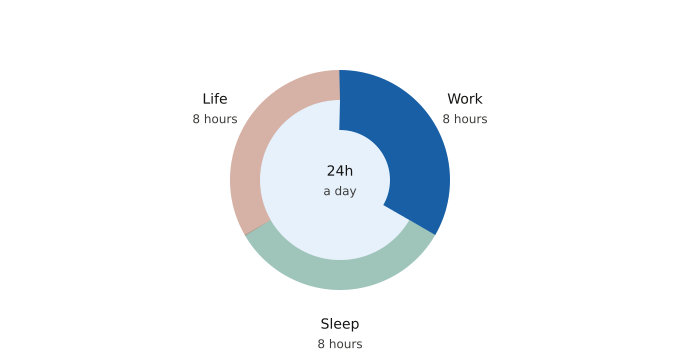
Most of us spend about a third of our lives at work. We often see our colleagues more than our family and friends, and yet only about one in five workers around the world say they're engaged in what they do.
That's always bothered me, because on paper we should be the happiest workers in history. We have remote work, four-day weeks, record wages and more career options than any generation before us, and the data still says things are getting worse.
To understand why, it helps to look at how we got here.
Work used to be simple
For most of human history, work was just what you did to survive. You hunted, farmed and built shelter, and there was no line between work and life because they were basically the same thing.
The industrial revolution moved work out of the home and into the factory, and for the next 150 years it mostly meant long hours, brutal conditions and no real alternative. Nobody asked whether they were satisfied at work. Work paid the bills, and meaning came from everything else, like family, faith and long Saturdays at the cricket.
Then work came with a ladder
After WW2, something new showed up, the career. Jobs were plentiful, unions were strong and companies had to fight for talent.
You could join a company at 22, climb for thirty years and retire with a pension, a paid-off house and a gold watch. Your employer became part of who you were. You were "an IBM man" or "a Ford guy", and IBM even had a company songbook staff sang at conferences.
Most importantly, meaning came with the job. Security, status, progression and belonging all arrived with the pay packet, and you didn't have to go looking for them.
Then the internet showed you everything
The internet made work portable, and Covid made it global. Whole new kinds of work appeared, from freelancers and creators to founders, and access to good jobs stopped depending on where you were born.
The catch was that you could now see every job you didn't have, every salary you weren't earning and every life you weren't living. The recruiter messages and LinkedIn alerts never stop, so staying put started to feel like settling.
People stopped climbing inside one company and started bouncing between them, chasing satisfaction wherever they could find it.
So what's actually going wrong?
I think three walls keep most people from finding work that feels meaningful.
The first wall goes up early. In Australia, we make career-defining decisions at 17 based on an ATAR score and a course brochure, with almost no real idea what any of those jobs feel like day to day. By the time you find out, you've spent four years and tens of thousands of dollars on a degree, and that sunk cost keeps you pointed in the same direction for another decade.
The second wall is choice. Once you're working, every other career looks better than yours, and scrolling through alternative lives in your head becomes its own daily torture. It's hard enough to pick something on Netflix, let alone a career.
The third wall is fear, and it's legitimate. The mortgage doesn't pause, and your partner isn't always thrilled when you say you're leaving stable work for something uncertain.
The costs are uneven, though. Staying in the wrong job costs you quietly, and that cost builds up over decades. Leaving costs you loudly, all at once, where everyone can see it. People almost always give the loud cost more weight than the quiet one, and that's how careers get stuck.
Underneath all three walls is a mismatch. The post-war career taught us to expect security, identity and belonging from work. That deal ended decades ago, but our expectations never caught up, so we're still hoping work will give us things it stopped offering a long time ago.
And there's almost nowhere good to turn for help. LinkedIn is mostly a cesspool of self-congratulatory nonsense. Parents mean well but often don't know what work looks like now, universities were never set up to help with careers, and executive coaches cost thousands.
And now it's happening again
AI is the next shift, and it's moving faster than the ones before it. You can already see the bottom rung of the ladder getting thinner, because mid-level people using AI can now do a lot of the work that used to go to juniors.
If the industrial revolution moved work from your body to a machine, and the internet moved it from an office to a laptop, AI is moving it from a person to a prompt. Nobody knows yet what the new deal looks like.
I'll admit a lot of questions I used to answer without thinking now have me stumped:
- What jobs are actually defensible today?
- What would I tell a high school graduate to study?
- Should someone quit their job and learn a trade?
- What will white-collar work look like in five years?
I don't have clean answers, and I'd be sceptical of anyone who says they do.
What I keep coming back to
Whatever AI changes, the question of finding work that fits you is going to matter more. Skills will shift, industries will reshuffle, and job titles will be invented and scrapped faster than anyone can track. The question of what work feels meaningful to you is the one anchor most people aren't paying enough attention to.
The post-war model handed you meaning with the job. That model is gone, but meaningful work isn't. You just have to build it more deliberately now, with less of a straight line and less of a safety net.
One caveat is worth keeping. Companies can restructure, lay you off or change in ways that make a job you loved unrecognisable, so the rest of your life has to carry some of the weight too.
Work can still be one of the best sources of meaning you have, and the three walls standing in the way are worth looking at honestly, especially now, while everything is being rewritten again.